Copper Bonded Earth Rod Manufacturers: Building Stronger and Longer-Lasting Earthing Systems

A dependable earthing system is essential for protecting electrical installations, industrial equipment, buildings, and people from electrical faults and transient currents. Among the most widely used grounding components, copper bonded earth rods provide a practical combination of electrical conductivity, mechanical strength, and corrosion resistance. As demand for reliable grounding solutions increases, copper bonded earth rod manufacturers are developing products for residential, commercial, industrial, telecommunications, renewable energy, and infrastructure applications.
What Are Copper Bonded Earth Rods?
Copper bonded earth rods consist of a steel core covered with a layer of copper. This construction combines the strength of steel with the excellent conductivity and corrosion resistance of copper. The copper layer is permanently bonded to the steel core, helping the rod maintain reliable electrical contact with the surrounding soil.
These rods are driven or installed into the ground as part of an earthing electrode system. Their performance depends on factors such as soil conditions, rod dimensions, installation depth, grounding design, and the quality of the copper bonding.
Importance of Quality Manufacturing
The quality of a copper bonded earth rod has a direct impact on the long-term reliability of a grounding system. Professional copper bonded earth rod manufacturers focus on maintaining consistent dimensions, proper copper bonding, suitable materials, and reliable mechanical strength.
The copper coating should remain securely bonded to the steel core during installation. A properly manufactured rod can withstand driving forces while maintaining a continuous conductive surface. Manufacturers may offer different rod diameters and lengths to meet the requirements of different grounding projects.
Quality control during production is also important. Consistent manufacturing helps ensure that rods meet specified technical requirements and provide dependable performance throughout their service life.
Benefits of Copper Bonded Earth Rods
One of the main advantages of copper bonded earth rods is their combination of conductivity and strength. Copper provides an effective conductive surface, while the steel core gives the rod mechanical durability.
Another important benefit is corrosion resistance. Because the external surface is made from copper, a properly manufactured rod can provide long-term performance in many soil conditions. This can make copper bonded rods a suitable choice for projects where grounding electrodes are expected to remain underground for extended periods.
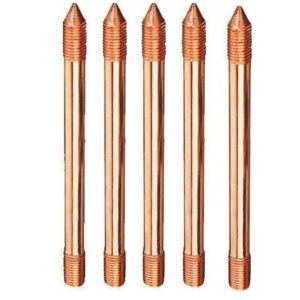
Their versatility is another advantage. Copper bonded earth rods can be incorporated into grounding systems for buildings, electrical installations, communication towers, solar projects, industrial facilities, and other infrastructure.
Applications Across Industries
Copper bonded earth rods are used in numerous applications where effective grounding is required. Electrical substations and distribution systems use grounding electrodes to support electrical safety and fault-current management. Industrial plants may use them as part of grounding networks for machinery, control systems, and electrical equipment.
Telecommunication towers and data-related infrastructure also require dependable grounding arrangements. Renewable energy projects, including solar installations, may use copper bonded earth rods as part of their earthing systems to help protect equipment from electrical faults and transient events.
Commercial buildings, residential projects, warehouses, and institutional facilities can also use these rods depending on their electrical design and grounding requirements.
Choosing the Right Manufacturer
When selecting copper bonded earth rod manufacturers, buyers should consider more than price. Important factors include copper thickness, rod diameter, length, steel core quality, bonding method, mechanical strength, corrosion resistance, and product consistency.
Manufacturers with suitable production capabilities and quality-control procedures can provide greater confidence in long-term product performance. Customers should also request technical specifications and relevant test documentation where required for their projects.
It is equally important to select rod dimensions according to the grounding design and local soil conditions. Proper installation is essential because even a high-quality earth rod will not perform effectively if the overall earthing system is incorrectly designed or installed.
Conclusion
Reliable grounding begins with high-quality components, and copper bonded earth rod manufacturers play an important role in supplying durable solutions for modern earthing systems. By combining a strong steel core with a conductive copper exterior, these rods offer a practical solution for many electrical and infrastructure applications. Businesses and contractors should evaluate material quality, copper bonding, dimensions, technical specifications, and manufacturing standards when choosing earth rods. With the right product and professional installation, copper bonded earth rods can contribute to a stable, durable, and effective grounding system.
