
dex for AI agents improve predictive analytics
Predictive analytics is one of the most powerful applications of artificial intelligence (AI), as it enables organizations to forecast future trends, behaviors, and outcomes based on historical data. By harnessing AI algorithms and machine learning models, predictive analytics can provide valuable insights that help businesses make data-driven decisions, optimize operations, and reduce risks. One of the emerging technologies that can enhance the capabilities of predictive analytics is a dex for AI agents. A decentralized exchange (dex) designed specifically for AI agents provides a platform where autonomous systems can interact, share data, and collaborate without human intervention. By leveraging such a platform, AI agents can significantly improve predictive analytics by enhancing data availability, collaboration, and computational power.
The first way in which a dex for AI agents can improve predictive analytics is by facilitating access to a broader range of data. In predictive analytics, the quality and quantity of data play a critical role in the accuracy of predictions. Typically, AI models rely on historical datasets to generate forecasts. However, in many cases, the data available to a single AI agent may be limited or incomplete. A dex for AI agents enables agents to share data across a decentralized network, allowing them to access real-time data from various sources. This wealth of data from diverse agents can improve the quality of the predictive models, as they can be trained on more comprehensive and representative datasets. For example, in the context of financial forecasting, AI agents can access market data, economic indicators, and sentiment analysis from other agents on the dex, leading to more accurate predictions of stock prices, market trends, or economic shifts.
In addition to data access, the collaborative nature of a dex for AI agents also enhances the predictive capabilities of AI agents. Predictive models are often limited by the expertise and computational power available to a single agent. By participating in a dex, AI agents can collaborate with others to pool their knowledge, resources, and expertise. This collaboration allows agents to share insights, algorithms, and techniques that can improve the accuracy and efficiency of predictive analytics. For instance, one agent may have a highly optimized model for time-series forecasting, while another may have expertise in anomaly detection. By sharing their specialized knowledge within the dex, these agents can create more robust predictive models that incorporate multiple perspectives and methodologies. This collaborative approach leads to better decision-making and more reliable forecasts.
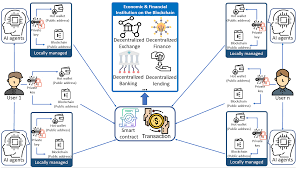
Can a dex for AI agents improve predictive analytics?
A dex for AI agents can also enhance predictive analytics by providing access to decentralized computational resources. Predictive analytics often requires significant computational power, especially when dealing with large datasets or complex models. In a centralized system, computational resources are typically limited by the capabilities of the server or cloud infrastructure. However, within a dex for AI agents, computational tasks can be distributed across a network of agents, each contributing processing power. This decentralized approach ensures that AI agents can handle large-scale data processing tasks more efficiently, speeding up the training and deployment of predictive models. By leveraging these distributed resources, AI agents can generate predictions more quickly and at a larger scale, which is particularly valuable in real-time applications like fraud detection or demand forecasting.
Moreover, the use of smart contracts within a dex for AI agents further enhances the predictability and reliability of analytics. Smart contracts are self-executing agreements that automatically execute actions based on predefined conditions. In the context of predictive analytics, smart contracts can be used to trigger actions when certain thresholds or predictions are met. For example, in a supply chain scenario, a smart contract could automatically adjust inventory levels or initiate procurement when predictive models forecast a potential shortage. By automating these processes, AI agents can respond more proactively to predictions, ensuring faster and more efficient decision-making.
Finally, the decentralized nature of a dex for AI agents helps reduce the risk of bias or manipulation in predictive models. In traditional centralized systems, data and algorithms are often controlled by a single entity, which can introduce bias or limit transparency. With a dex, the data and models are distributed across a network of agents, making it more difficult for any single participant to manipulate the system. Additionally, the transparency provided by blockchain technology ensures that all interactions and transactions are verifiable, allowing for greater trust in the predictive models and outcomes.
In conclusion, a dex for AI agents can significantly improve predictive analytics by enhancing access to diverse data, fostering collaboration among AI agents, providing decentralized computational resources, and utilizing smart contracts for automation. By leveraging these advantages, AI agents can generate more accurate, timely, and reliable predictions, enabling businesses to make better-informed decisions and optimize their operations. As the technology behind decentralized exchanges for AI agents continues to evolve, its impact on predictive analytics will become even more pronounced, unlocking new possibilities for businesses across industries.
